
NERVOUS SYSTEM REGULATION · LITTLEHAMPTON
When your nervous system settles, everything else follows.
Thirty minutes that help you feel more relaxed – not through willpower, breathing exercises or another app. You lie back and relax the session handles the rest. Members notice sleep first, then relaxation and stress, the rest of it follows.
NERVOUS SYSTEM REGULATION · LITTLEHAMPTON
When your nervous system settles, everything else follows.
Thirty minutes that help you feel more relaxed – not through willpower, breathing exercises or another app. You lie back and relax; the session handles the rest. Members notice sleep first, then relaxation and stress, then the rest of it follows.
How it works
Your body has two pedals. Most people drive with one.
Gas is the stress response - useful, and meant to be brief. Brake is the recovery side, and it's the one that goes quiet when it's never asked for. Both pedals are yours. After enough years of stress the nervous system forgets how to lift the gas pedal and press on the brake (that's how we get stuck in that fight or flight mode).
Foot on the gas (STRESSED NERVOUS SYSTEM)
What a stressed nervous system feels like
RestPressed, and held
- Waking at 3am and not getting back down
- Lying there with your mind still going long after lights out
- Waking up already tired, before the day has started
- Wired all evening, then flat by mid-morning
- A short fuse over things that shouldn't matter
- Shoulders and jaw held tight without noticing
Foot on the brake (CALM NERVOUS SYSTEM)
What a calm nervous system feels like
RestBarely touched
- Falling asleep quicker, and staying down
- Sleeping deeper and waking up properly refreshed
- Steady energy instead of peaks and crashes
- A longer fuse — things bounce off
- Digestion settling
- Shoulders dropping without being told to
We don't lift your foot off the gas. We put it on the brake and hold it there.
What we actually do
Your brake has a wire. It's called the Vagus Nerve
What we do
A pulse, straight onto the nerve
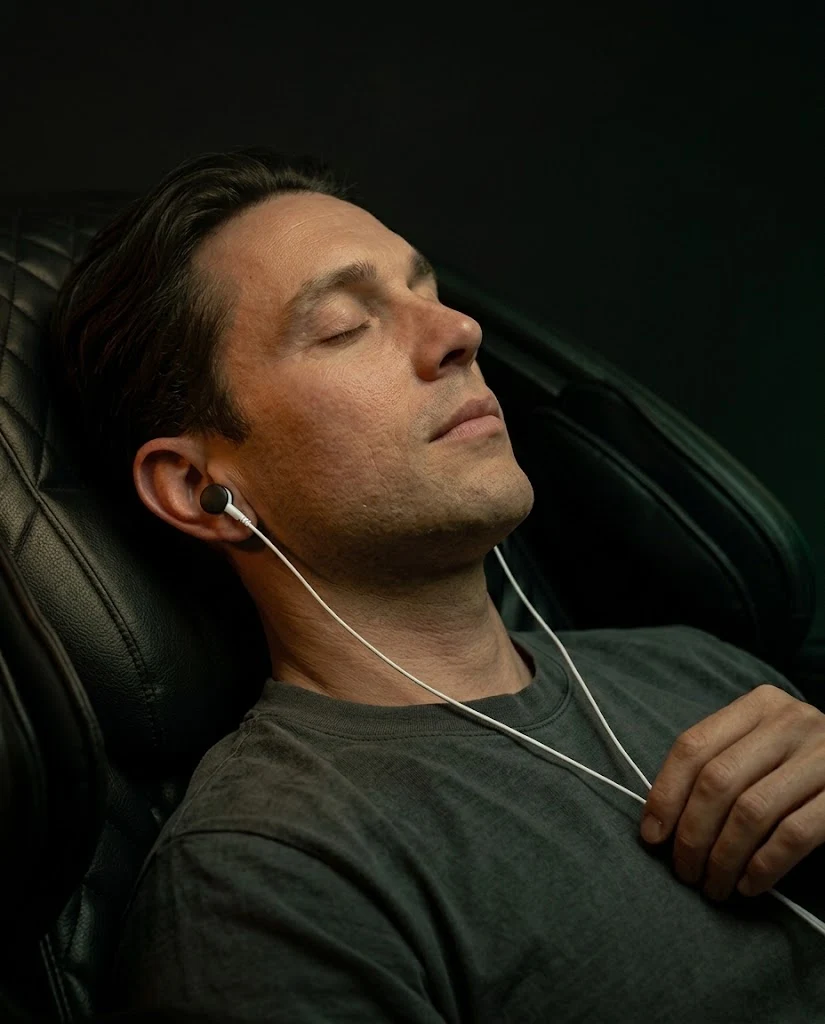
The vagus nerve is the wire between your brain and your heart, lungs and gut. One branch of it comes to the surface in your outer ear. A soft earset sits there for 30 minutes and sends a gentle pulse into it.
What it does
Not willpower. Not meditation.
Stay under constant pressure and that pathway gets used less and less, until fight-or-flight is the default setting. Stimulating the nerve puts the signal in directly, rather than waiting for your mind to go quiet first - the part nobody can do to order.
What you feel
A tingle, then you're gone
A light tingling in the ear, pulsing on and off. You notice it for a minute, then forget it's there. Heart rate settles, shoulders drop, you relax.
Relaxing is something you try to do. This happens whether you're good at it or not.
What to expect
Your first session,start to finish.
You arrive
Free parking right outside. We greet you, run a short health check, and answer anything you want to ask before we begin.
We settle you in
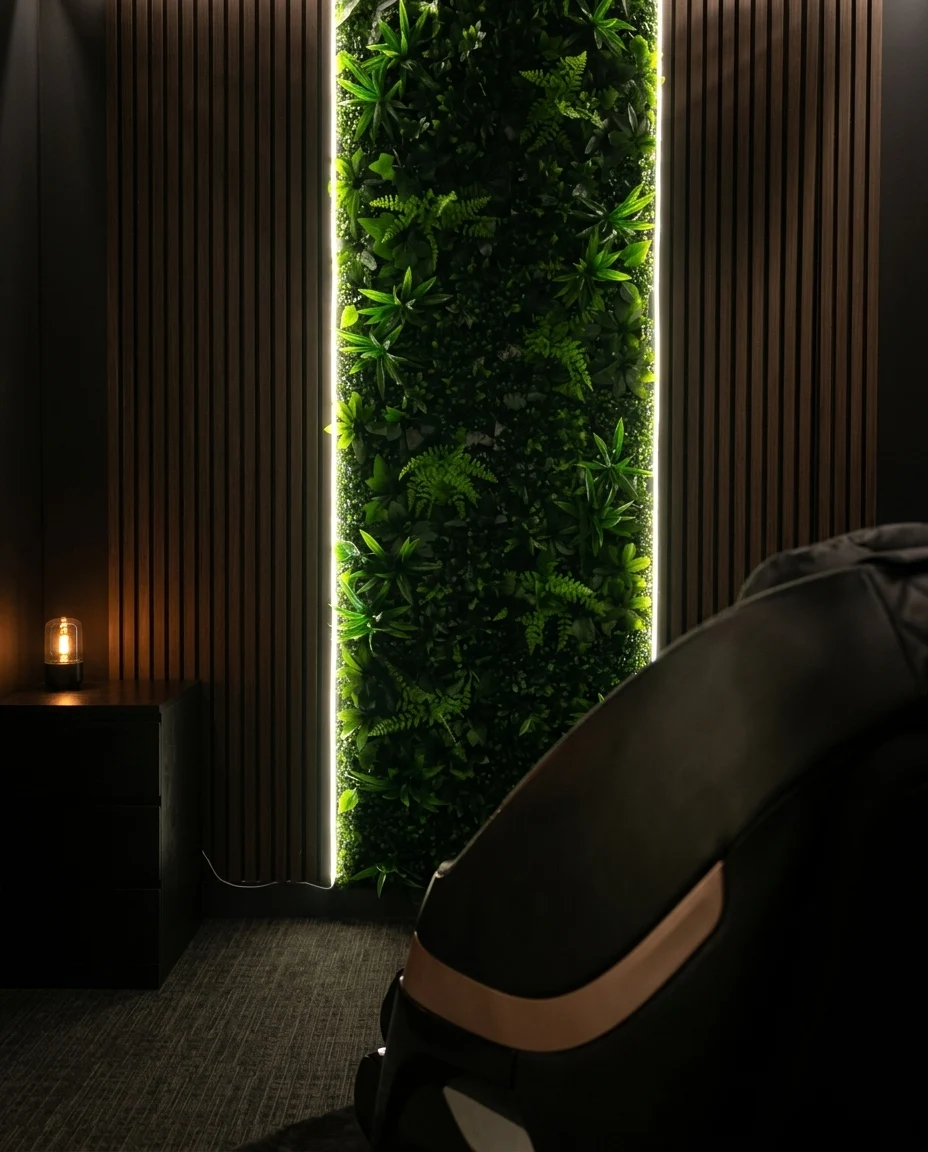
Fully clothed, into the chair. It reclines until your knees sit above your heart. We fit the electrodes, set the level with you, then dim the room and leave you to it.
Thirty quiet minutes
A light tingle in the ear, pulsing on and off. One low sound, one scent, and 30 minutes just for yourself.
You carry on with your day
No downtime, no recovery, nothing to plan around.
Trusted by 200+ members across West Sussex
A
E
D
200+The thirty minutes members come back for.
I’ve noticed so many health benefits already, especially a significant improvement in the quality of sleep.
I also started NSR and have noticed improvement in general anxiety and feeling more well rested when I wake up.
I wake up rested and ready to go. Mentally, I feel like my mind is clearer, I procrastinate less and just want to do things...
Feel the difference
30 mins for you to lie back and relax.
No technique to learn, nothing you need to do. You lie back and let the machine do it's work while you relax.
Screened before you start
A short health check on your first visit, so we know it's right for you before anything is switched on.
Open 7 days, 9am to 9pm
Before work, after work, Sunday afternoon. Built to fit around your week rather than the other way round.
One session, no commitment
No membership to join, no course to sign up to. Come once, see how you find it, decide after.
Sits well before or after HBOT
Plenty of members book NSR alongside a chamber session and make an hour of it rather than two trips.
Start with thirty minutes to yourself.
Book your first sessionFrequently asked questions
What members ask
Anything we haven't covered, just ask when you arrive.
What is Nervous System Regulation?
Thirty minutes in a dark, quiet room, reclined in a zero-gravity chair, with a soft earset sending a gentle pulse to the branch of the vagus nerve that surfaces in your outer ear.
What does a session feel like?
A light tingling in the ear, pulsing on and off. Most people notice it straight away, get used to it within a minute, then forget it's there for the rest of the session.
Is it painful?
No. We set the level with you at the start and adjust it down if you'd prefer it softer. It should feel gentle the whole way through.
What if I can't switch off?
Nothing is asked of you. There's no technique to learn and no way to do it wrong — the pulse goes in whether your mind is quiet or still running.
Can I fall asleep?
Plenty of people do, and it's completely fine. You're not missing anything by dropping off.
Who should not do NSR?
Anyone with a pacemaker or another implanted electronic device. We also ask about pregnancy, epilepsy, and any problem with the skin inside your ear. Everyone completes a short health check before a first session.
How long does a session last?
The stimulation runs for thirty minutes. Allow a little longer for your first visit so we can go through the health check and set you up without rushing.
What should I wear?
Whatever you arrived in. Clothes stay on — there's nothing to change into.
Is someone with me during the session?
We fit the earset, start the session and check you're comfortable, then leave you on your own for the thirty minutes. We're just outside if you need anything.
Can I stop partway through?
Yes, any time, for any reason.
Can I just buy a device and do this at home?
You can buy a device, yes. What's harder to arrange at home is the rest of it — a room with nothing arriving in it, a chair that takes the load off your body, the settings chosen for you, and someone else running the clock so you're not the one deciding when it's over. And then actually doing it, on a Tuesday, four times in a fortnight.
Can I drive afterwards?
Yes. There's no downtime and nothing to recover from — most people head straight back into their day.
Safety & disclaimer
A wellness centre,not a clinic.
ReviveO2 is a wellness centre, not a medical clinic. We don't diagnose, treat or cure medical conditions, and nothing here is medical advice. What members describe is their own experience, and everyone is different. If you have a health concern, please speak to your GP. The equipment used in Nervous System Regulation is general wellness equipment and is not a medical device.
WHY IT MATTERS
Could Your Nervous System Be Stuck in Survival Mode?
Modern life keeps a lot of us in “on” mode all the time – messages, deadlines, family, scrolling, repeat. When your nervous system doesn’t get a chance to switch out of survival mode, it’s normal to feel wired, tired and not quite yourself.
It shows up in the small things first – poor sleep, a short fuse, scattered focus – and it slowly becomes the new normal. Over time, you start to realise you’re functioning… but not really feeling like you anymore.


THE SCIENCE
Why it works.
Your nervous system has a built-in pathway for calm. When life keeps you in a constant state of stress, that pathway gets weaker — and fight-or-flight becomes your default.
Our sessions use precision neuro-stimulation to activate your body’s own calming response. Not through willpower. Not through meditation. Through direct, guided stimulation of the exact biological pathway your body already uses to regulate stress, sleep, and recovery.
The more regularly you come, the better it works. Each session helps your nervous system remember how to return to calm more easily — like training a muscle, until it becomes effortless.