
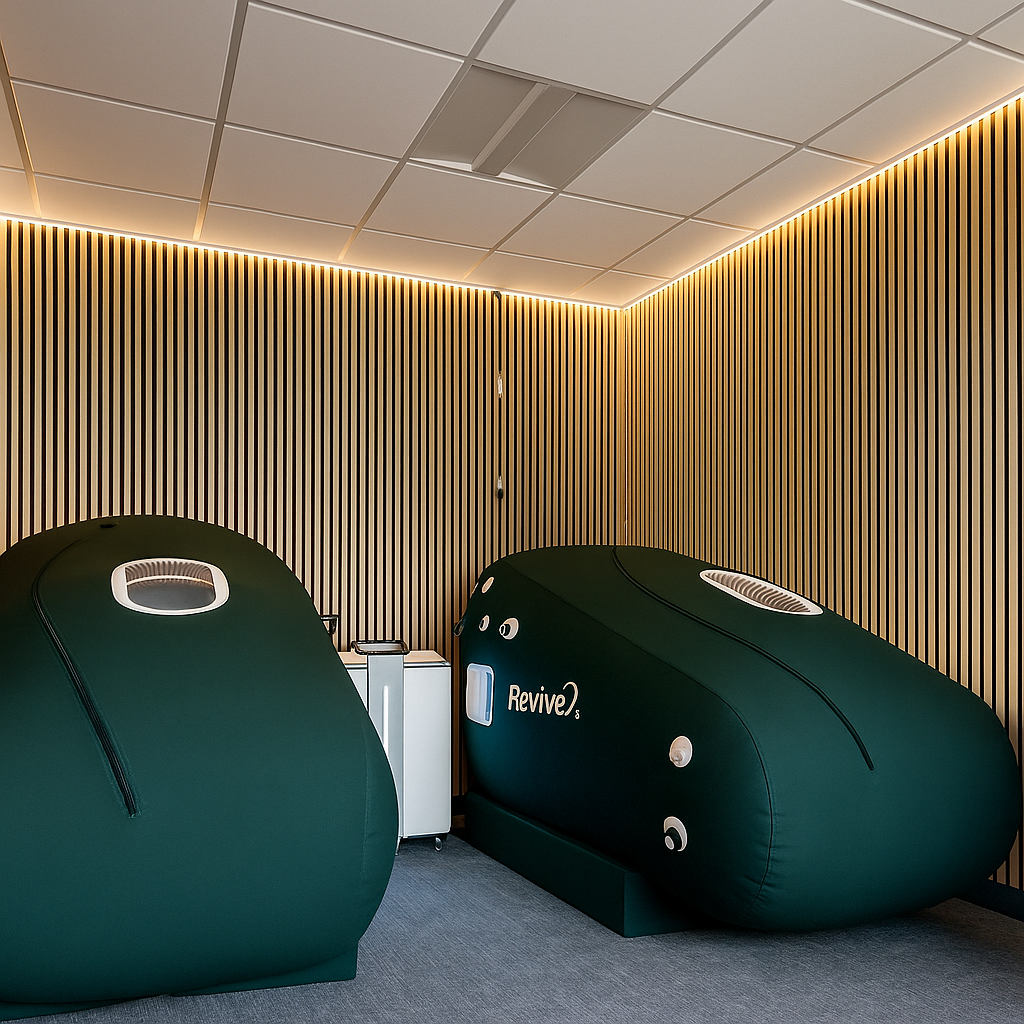
HYPERBARIC OXYGEN THERAPY
Breathe. Rest. Recover.
One hour of the day that’s completely yours – to sleep deeper, rest fully, recover faster, and think clearer.
HYPERBARIC OXYGEN THERAPY
Breathe. Rest. Recover.
One hour of the day that’s completely yours – to sleep deeper, rest fully, recover faster, and think clearer.
How it works
It's not just breathing better.
Your red blood cells are already almost fully loaded however deeply you breathe, they have a ceiling. With pressure that changes.
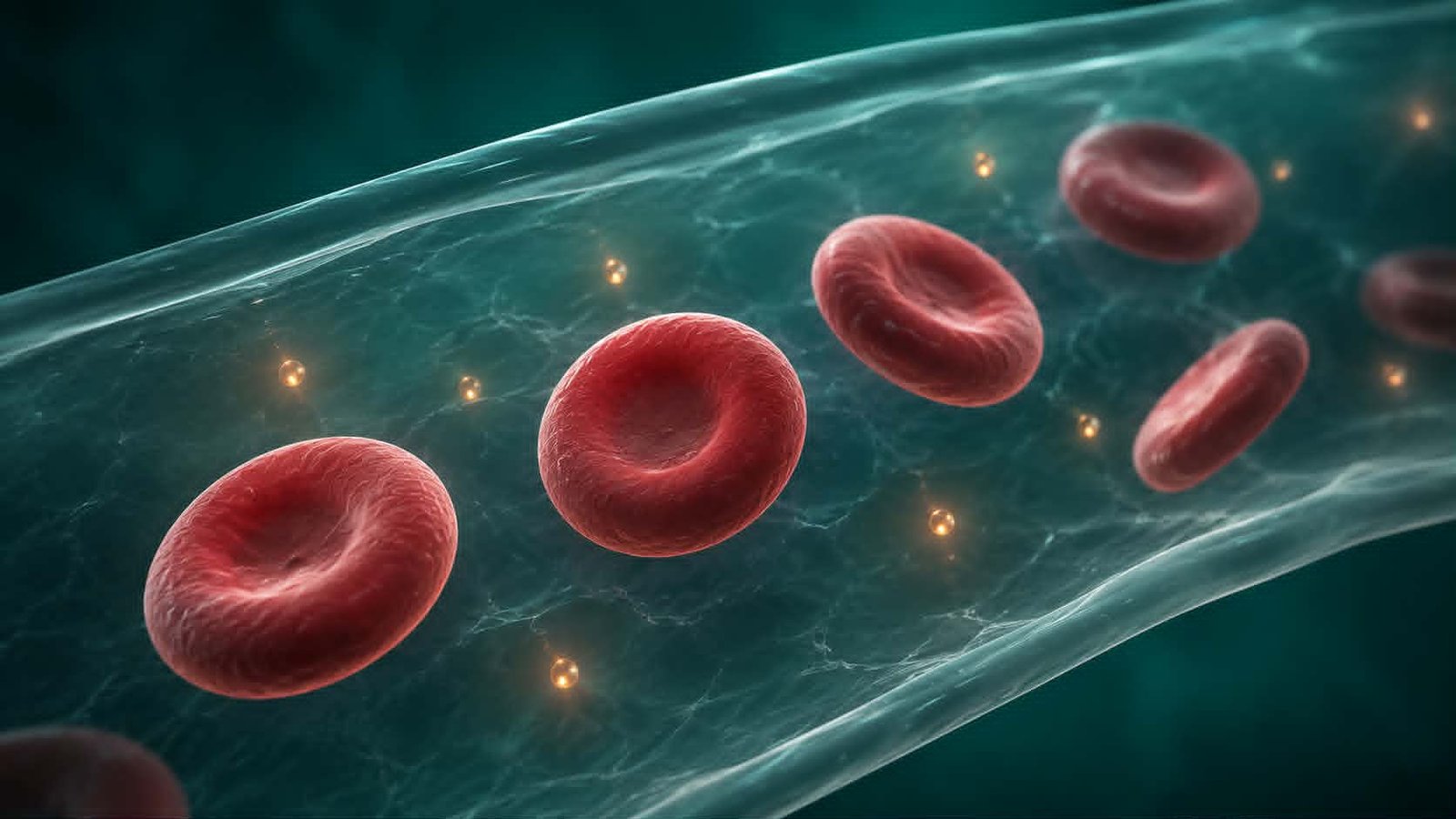
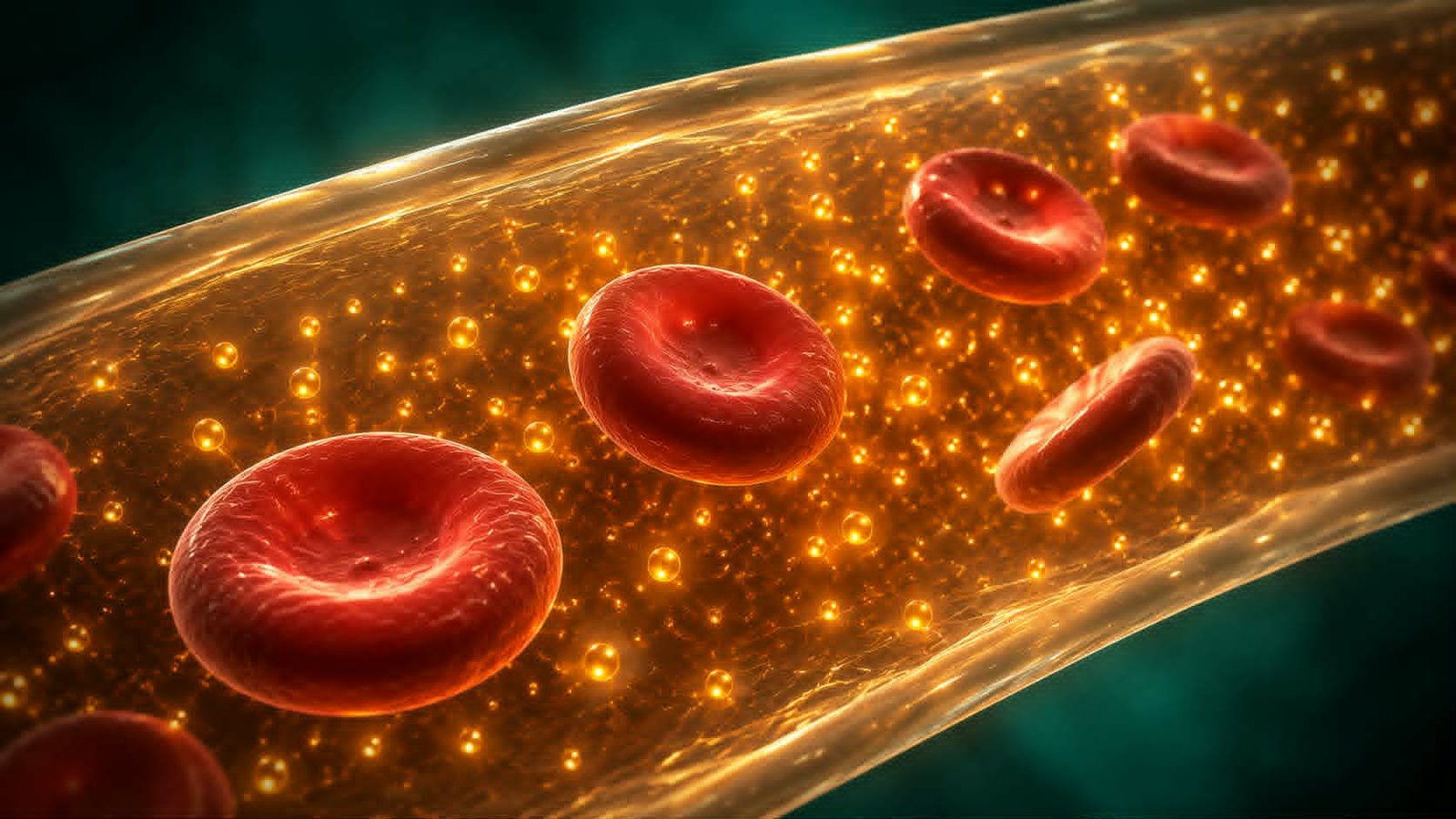
So what?
Oxygen your blood couldn't carry before, now reaches tissue it couldn't reach before.
The science, and the feeling
What oxygen does - and what you notice.
More oxygen reaching your tissue sets your body's own repair processes in motion. Here's the chain, end to end.
- Supports new blood vessels angiogenesis Oxygen supports the growth of new small vessels, improving circulation to tissue over time.Recovery tends to speed up
- Mobilises your own stem cells stem cell mobilisation Raised oxygen signals bone marrow to release more of the cells your body repairs and renews with.Strain and everyday wear settle faster
- Helps calm inflammation oxidative balance Oxygen helps regulate the body's inflammatory response, shifting the balance toward repair.Less lingering soreness and stiffness
- Fuels cellular energy mitochondria Oxygen is the fuel your mitochondria use to produce energy - more available means more to draw on.Steadier energy through the whole day
- Reaches brain tissue cerebral oxygenation The brain is one of the body's hungriest tissues for oxygen and among the first to feel a shortfall.A clearer head, sharper focus, less fog
- Supports collagen and tissue repair fibroblast activity Collagen production is oxygen-dependent - the framework your skin, joints and connective tissue rebuild on.Skin, joints and tissue that hold up better
- Supports natural defences white blood cell function Oxygen is what your body's own defence cells use to do their work effectively.A body that copes with more
- One hour fully offline nervous system No phone, no demands, nothing to do but breathe - an hour your nervous system rarely gets.Calmer, and deeper sleep that night
These are physiological effects of oxygen under pressure, documented in published research. Individual experience varies, and members descriptions are self-reported. We're - we don't treat conditions. See the research
What to expect
Your first session, start to finish.
You arrive
Free parking right outside. We greet you, run a short health check, and answer anything you want to ask before we begin.
We settle you in
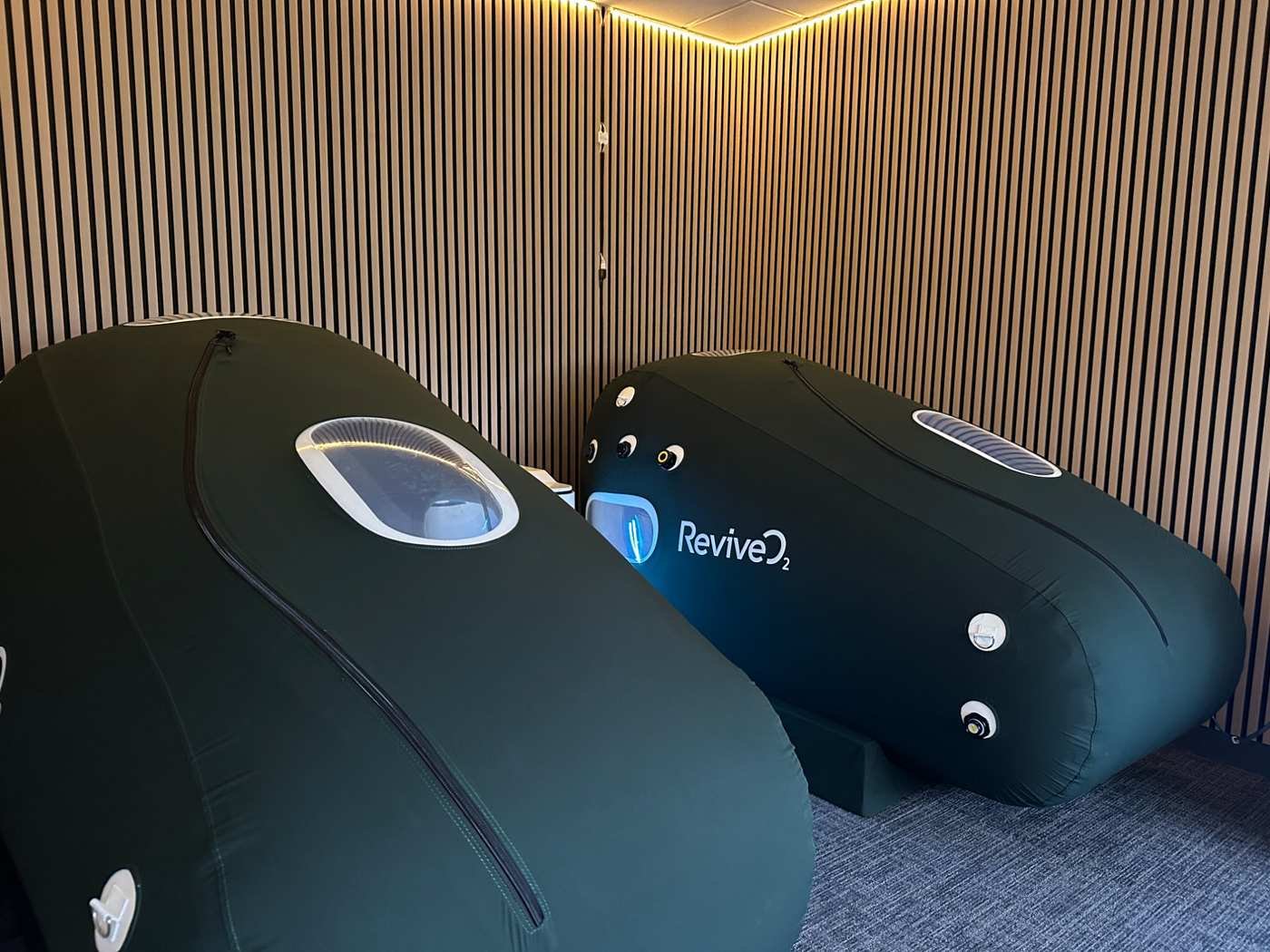
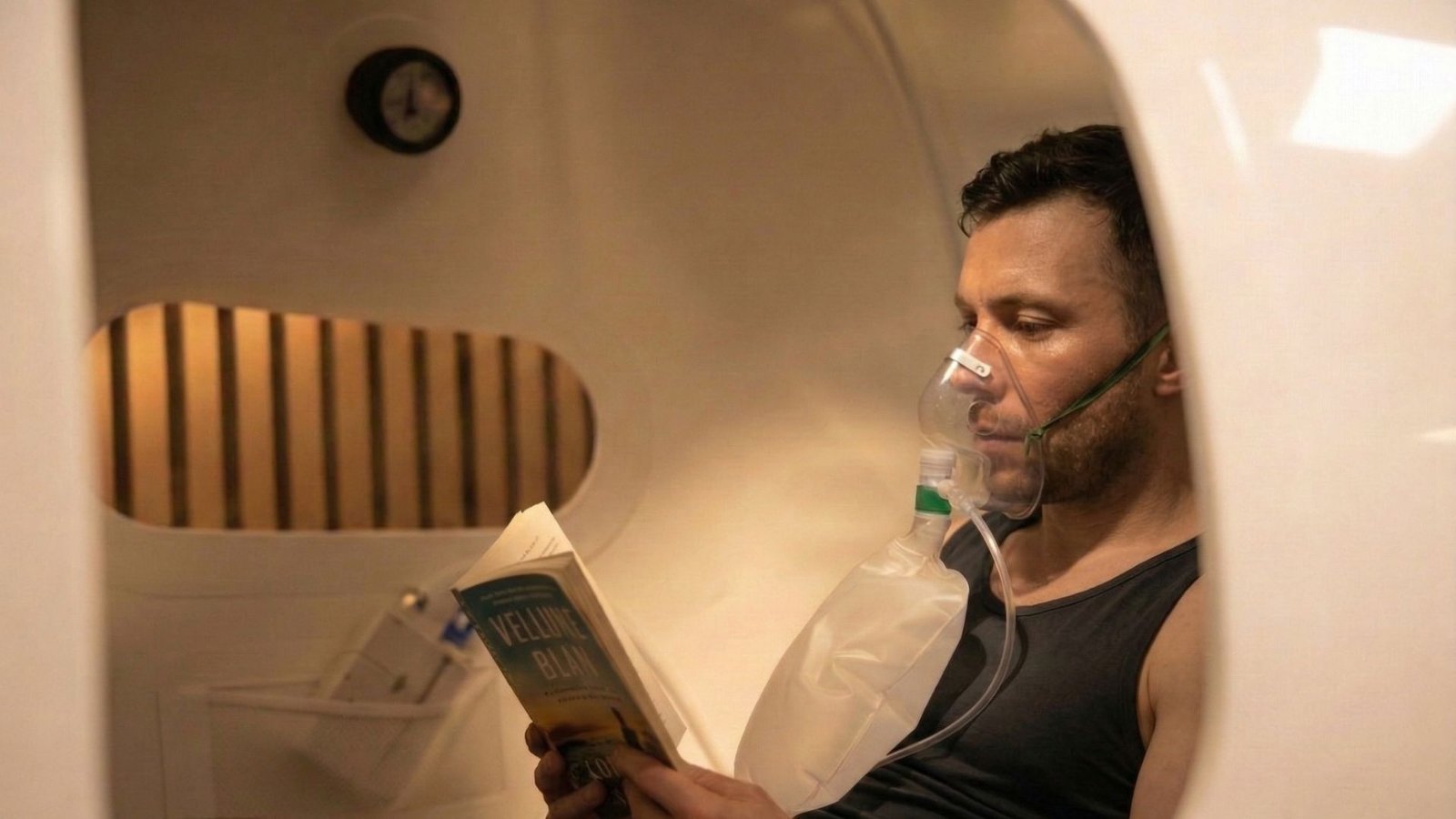
Fully clothed, into the chamber. We fit the mask, show you everything around the session, and stay close by the whole time.
One quiet hour
Pressure builds gently, like a plane descending. Read, nap, or meditate and relax. You can stop and come out whenever you like.
You carry on with your day
No downtime, no recovery, nothing to plan around.
about us
HBOT at ReviveO₂
-
Trained & Certified Operators
Certified by DDRC Healthcare, the UK’s leading hyperbaric centre.
DDRC Healthcare certified -
Your safety & comfort
Everything that matters, handled - so you can just switch off.
- Everyone screened first
- Someone with you the whole hour
- Stop and come up any time
-
Open every day
Monday to Sunday, 9am–9pm. Early mornings, late evenings and weekends - whatever fits your week.
-
No membership needed
Start with a single session. No contracts or subscriptions, and any package of sessions you get doesn't expire.
Who does hbot
Why our members keep coming back
Some of the reasons we hear why our members are doing HBOT, and there are always more.

Not sleeping properly
The nights that don't put you back together
Sleep is the change members mention first - usually within the first few visits.

Never quite switching off
An hour where nothing can reach you

Training hard
Recovering for the next one, sooner
REVIVEO₂ member
HBOT has been doing wonders for my chronic fatigue and pain which I have been suffering with for 20+ years. After just a few session, I noticed a reduction in muscle pain and brain fog, and an improvement in mood.
ADELE · 40+ sESSIONS

Foggy by mid-afternoon
A head that clears, and stays clear
Our brain uses 20% of the oxygen we breathe, so here is where members notice the difference most.
And everyone else
You don’t need to be struggling to come here.
- Simply staying well - the preventative sort
- Perimenopause, and everything around it
- Foggy by the middle of the afternoon
- Long days on your feet
- New parents running on very little
- Sport at the weekend, a desk all week
Feel The difference
Serious recovery, ten minutes away.
The kind of setup that used to mean a trip to London, now it’s a car park off Courtwick Lane.
-
Trained & Certified Operators
Trained & certified by DDRC Healthcare, the UK’s leading hyperbaric centre.
-
Open 7 days, 9am to 9pm
Before work, after work, Sunday afternoon. Built to fit around your week rather than the other way round.
-
Four Therapies, One Place
Hyperbaric oxygen, red light & PEMF, nervous system regulation and pelvic floor. Focus on one, or stack them as you go.
-
Even better alongside Red Light
HBOT stacks with our Red Light & PEMF sessions - members who do both tend to feel more than either on its own.
Start with one quiet hour for yourself.
Book your first sessionFrequently Asked Questions
What members ask
Anything we haven’t covered, just ask when you arrive.
What is HBOT and how does it work?
A guided session where you breathe oxygen in a pressurised chamber. The higher pressure helps dissolve more oxygen into your blood plasma, so it can reach areas that are harder to support under normal conditions.
Is Hyperbaric Oxygen Therapy safe?
HBOT has been used worldwide for many years and has a strong safety record when run correctly. We use soft chambers at a gentle wellness pressure of 1.5 ATA, and follow clear screening and safety checks before every session.
How is this different from HBOT in hospitals?
Medical HBOT in hospitals uses higher pressures and is reserved for specific conditions under medical supervision. We offer mild HBOT at lower pressures as a wellness service — to support energy, recovery and general balance, not to treat medical conditions.
Who should not use HBOT?
HBOT isn’t suitable for everyone. It’s not advised if you have an untreated pneumothorax, certain serious lung or ear problems, or if you’re pregnant. We go through a safety checklist with you before booking to check it’s appropriate.
What does a session feel like?
The main sensation is a gentle build-up of pressure in the ears as the chamber pressurises — similar to flying, or driving up a hill. Once you reach pressure it feels calm and quiet, and most people simply rest, read or nap.
Will I feel claustrophobic in the chamber?
Our soft chambers are roomy enough to sit up in, with clear windows so you can see out. You’re in contact with staff at all times, and the chamber can be brought back to normal pressure and opened whenever you want to stop.
Is it painful?
No. Some people feel brief pressure in the ears during the first few minutes while the chamber pressurises — we show you simple ear-clearing techniques to keep it comfortable.
How long does a session last?
About 60 minutes at pressure, plus a few minutes at each end while the chamber pressurises and depressurises. Allow around 75 minutes in total for your appointment.
How quickly might I notice a difference?
Some people feel a lift in clarity or energy after one or two sessions. For deeper changes you usually need a series, so your body has time to use the extra oxygen as part of its normal repair and recovery processes.
What should I wear?
Loose cotton clothing — avoid synthetic sports fabrics that can hold static. Jewellery, watches, aerosols and oils need to be removed before entering the chamber.
How should I prepare?
Arrive well hydrated, have a light meal one to two hours before, and use the restroom before you go in. It helps your ears clear pressure more easily and lets you relax for the full session without interruption.
Can I use my phone inside the chamber?
No — electronic devices aren’t allowed inside, because HBOT uses an oxygen-enriched environment and we avoid any unnecessary ignition risk. Most people use the time as a quiet digital break.
Safety & Disclaimer
A wellness centre,
not a clinic.
ReviveO2 is a wellness centre, not a medical clinic. We don't diagnose, treat or cure medical conditions, and nothing here is medical advice. What members describe is their own experience, and everyone is different. If you have a health concern, please speak to your GP. Wellness HBOT is delivered at a gentle pressure and differs from hospital-based hyperbaric treatment for specific medical conditions.
Questions
Things members ask
before booking.
Most people describe an unusual calm during the session. Warm, still, deeply relaxed. Some fall asleep. Some read. A few feel nothing during at all — then sleep better than they have in months that night.
Session 1 your body is adapting. Session 2 it responds. Session 3 is where most people feel a genuine shift. We tell everyone this before they come in so expectations are right.
Yes. The intro session is £35. No package required, no contract, no obligation to return.
If you decide to continue, that £25 comes off your first package.
No referral needed. Mild HBOT at 1.5 ATA is well-tolerated by most adults. The most common sensation is slight ear pressure during pressurisation — like descending in a plane. It passes in seconds.
We screen every client before their first session. If you have certain lung conditions, recent surgery, or take specific medications, we'll know about it before you book. Your safety matters more to us than the booking.
Less than you'd expect. The chamber is a soft-shell pod — wider than it looks, and you can sit upright. You're in control throughout and can talk to us at any point.
If you're genuinely worried, come in and look before you book. We'll show you the chamber, you can put your head inside, and you decide. No pressure to get in on the first visit.
Wear comfortable, loose clothing. No outdoor shoes inside the chamber. No jewellery with sharp edges. That's it.
Eat normally beforehand. Stay hydrated. Avoid alcohol, smoking or sparkling drinks in the hours before. We handle everything else when you arrive — the session takes about 75 minutes in total including the chat at the start.
We are located in Littlehampton just behind Morrisons. We have free parking on site. Open 7 days, 9am to 9pm.
Easy to reach from Worthing, Chichester, and Brighton off the A259. Email hello@reviveo2.com if you need directions or want to pop in before booking.
Frequently Asked Questions
What is Hyperbaric Oxygen Therapy (HBOT) and how does it work?
Hyperbaric Oxygen Therapy is a guided session where you breathe oxygen in a pressurised chamber. The higher pressure helps dissolve more oxygen into your blood plasma so it can reach areas that are harder to support under normal conditions.
Is Hyperbaric Oxygen Therapy safe?
HBOT has been used worldwide for many years and has a strong safety record when it is run correctly. At ReviveO2 we use soft chambers at a gentle wellness pressure of 1 point 5 ATA and follow clear screening and safety checks before each session.
How is wellness HBOT at ReviveO2 different from medical HBOT in hospitals?
Medical HBOT in hospitals uses higher pressures and is reserved for specific emergency conditions under medical supervision. At ReviveO2 we offer mild HBOT at lower pressures as a wellness service to support energy, recovery and general balance rather than to treat medical conditions.
Who should not use HBOT?
HBOT is not suitable for everyone. It is not advised if you have an untreated pneumothorax, certain serious lung or ear problems, or if you are pregnant. We go through a safety checklist with you before booking to see if HBOT is appropriate.
What does a HBOT session feel like?
The main sensation is a gentle build up of pressure in the ears as the chamber pressurises, similar to flying in a plane or driving up a hill. Once you reach the target pressure it feels calm and quiet and most people simply rest, read or nap.
Will I feel claustrophobic in the chamber?
We use soft chambers that are roomy enough to sit up in and they have clear windows so you can see out. You are in contact with staff at all times and the chamber can be brought back to normal pressure and opened if you want to stop.
Is the HBOT session painful?
No. The session itself is not painful. Some people feel brief pressure in the ears during the first few minutes while the chamber is pressurising and we show you simple ear clearing techniques to keep this comfortable.
How long does a HBOT session last?
A typical HBOT session at ReviveO2 is about 60 minutes at pressure, plus a few minutes at the start and end while the chamber is pressurised and depressurised. You should allow around 75 minutes in total for your appointment.
What do people typically feel after a session?
Some people say they feel more relaxed, or notice a sense of refreshment after one or two sessions. For some people, the best results come from doing a series of sessions, mainly for consistency and routine. Everyone’s experience is different, and there is no guaranteed outcome.
What should I wear to my HBOT appointment?
For safety we ask you to wear loose cotton clothing and avoid synthetic sports fabrics that can hold static. Jewellery, watches, aerosols and oils should be removed before entering the chamber.
How should I prepare for my HBOT session?
Arrive well hydrated, have a light meal one to two hours before your appointment and use the restroom before you go into the chamber. This helps your ears clear pressure more easily and lets you relax for the full session without interruption.
Can I use my phone inside the hyperbaric chamber?
No. Electronic devices are not allowed inside the chamber because HBOT uses an oxygen enriched environment and we must avoid unnecessary ignition risks. Most people use the time as a quiet digital break to rest, read or meditate.
Research note: Hyperbaric Oxygen Therapy has been studied in a range of settings, including hospital and wellness protocols, with research exploring its effects on oxygen delivery, recovery and other physiological markers. For detailed explanations and study links, see our FAQ page.