
Hyperbaric Oxygen Therapy (HBOT):
Complete wellness guide

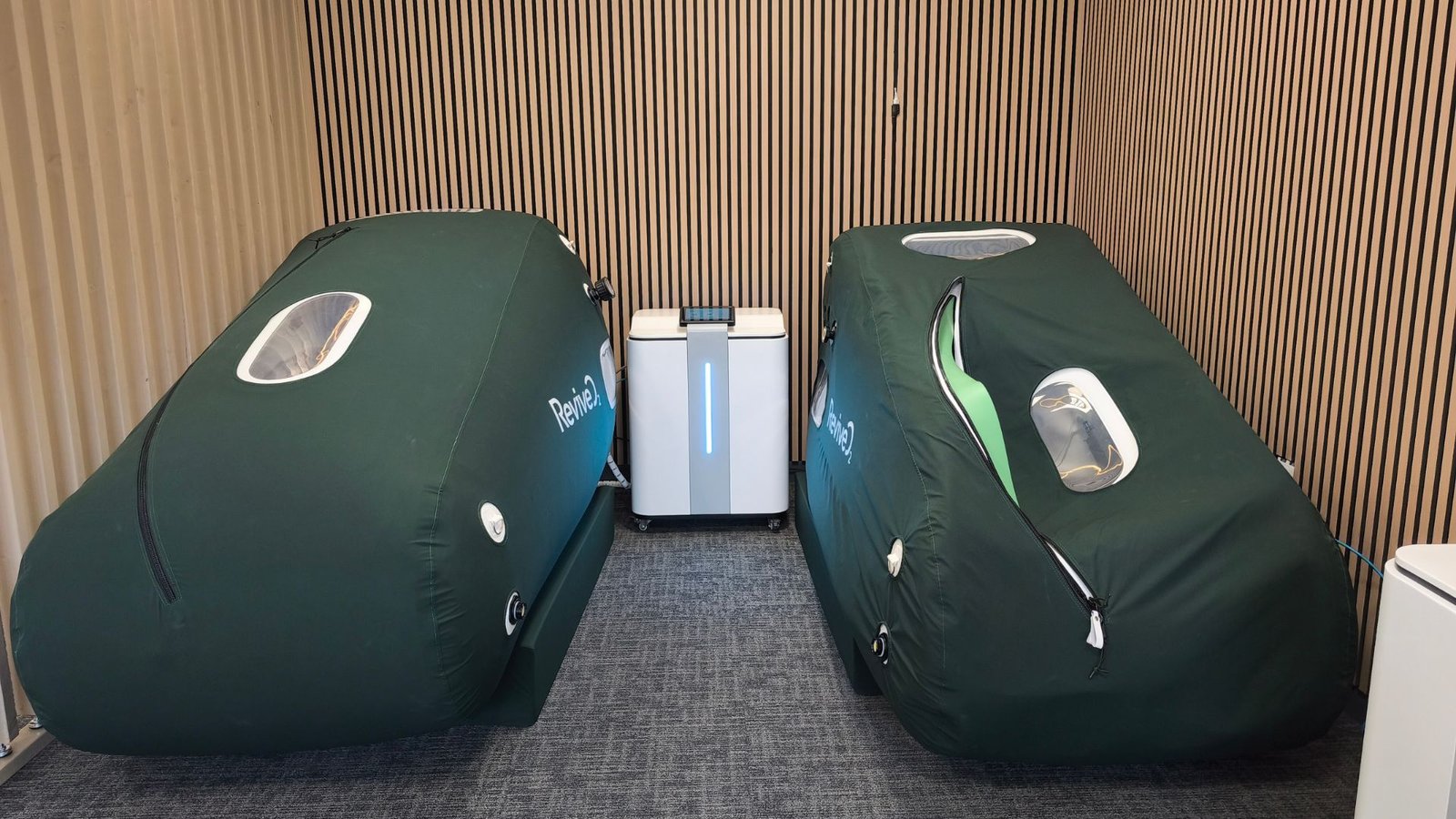
The HBOT chamber at ReviveO2 Wellness Centre, Littlehampton - sessions run at 1.5 ATA
Hyperbaric Oxygen Therapy, also called HBOT, is a wellness session where you relax in a pressurised chamber. The pressure helps your body take in more oxygen than it normally can. At ReviveO2, we offer HBOT sessions in Littlehampton, West Sussex, as a supervised wellness service.
People try HBOT for different reasons, like post-workout recovery, switching off from a busy week, or building a simple wellness routine. At ReviveO2 in Littlehampton, sessions are designed to feel calm, comfortable, and easy to follow.
This guide explains what HBOT is, how it works, what the session feels like at ReviveO2, and how it differs from medical hyperbaric treatment. It is written for locals in Littlehampton and surrounding towns in West Sussex who want to know what to expect before booking.
At a glance
- What it is: A relaxed session in a pressurised chamber where you breathe normally
- Session length: About 65 minutes total (60 minutes in the chamber, plus around 5 minutes for pressurisation and decompression)
- Pressure at ReviveO2: 1.5 ATA
- Who it is for: People who want a calm reset, post-workout recovery support, or a simple wellness routine
- Who should not do it: Collapsed lung, certain lung conditions, untreated ear issues or recent ear surgery, uncontrolled seizures, severe claustrophobia, pregnancy, or currently unwell with a cold or flu. Always complete the screening and check with your clinician if you are unsure
What Hyperbaric Oxygen Therapy is
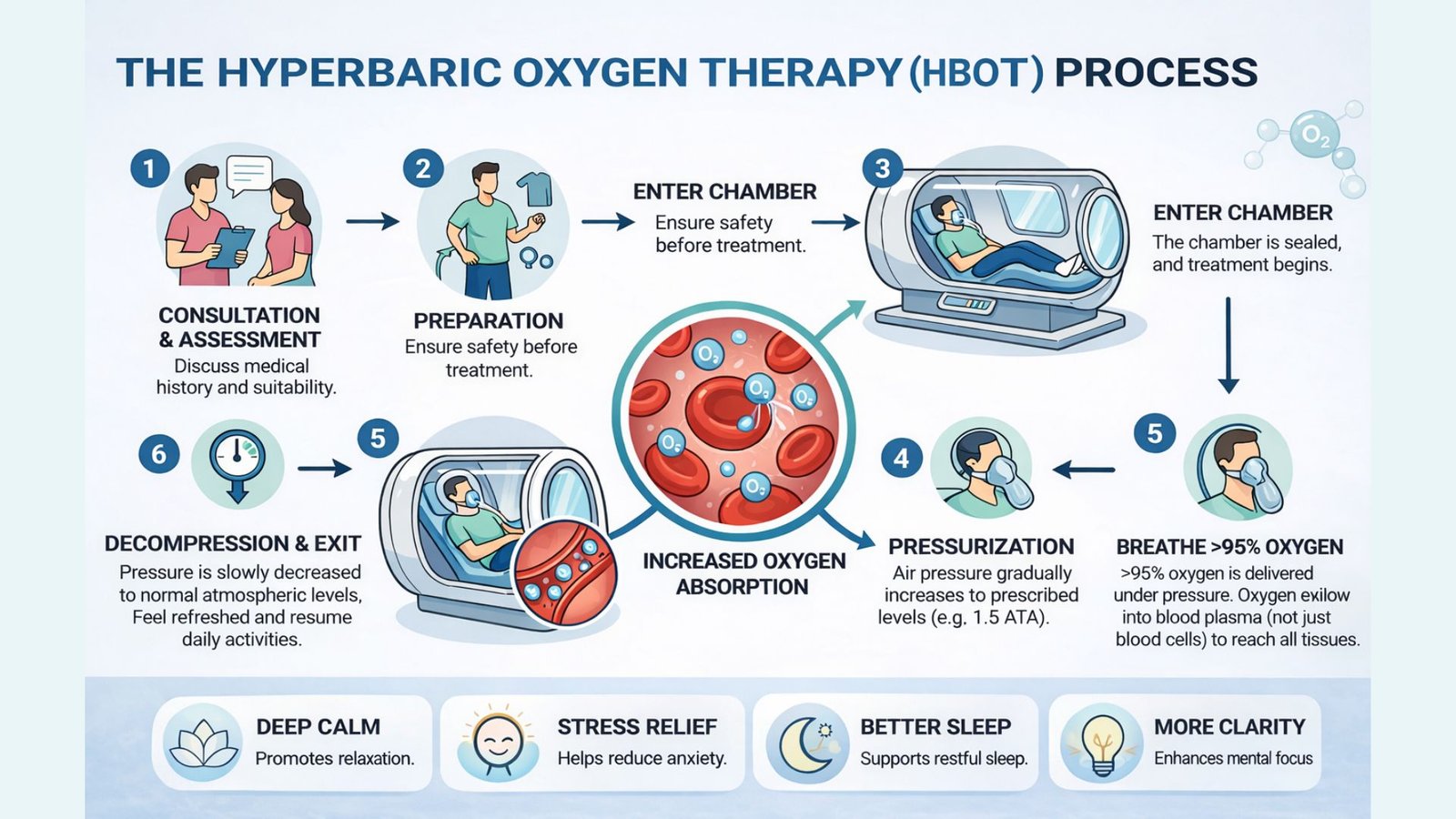
Inside the chamber, you breathe normally throughout the session while the pressure increases gradually. A trained operator supervises and can slow down or pause if you need a moment to equalise your ears.
For general background information on medical HBOT, see reputable sources such as the NHS and Mayo Clinic. This guide focuses on wellness HBOT sessions at ReviveO2 in Littlehampton.
Medical HBOT can use higher pressures and is delivered in hospital or clinic settings under medical supervision for specific approved indications.
At ReviveO2, sessions take place in a soft-shell chamber at 1.5 ATA, delivered as a supervised wellness session.
- A calm, guided hour to switch off
- A simple add-on to a recovery routine after training or long workdays
- A quiet space to rest, breathe, and reset
- A wellness habit some people enjoy as part of their week
How Hyperbaric Oxygen Therapy works
The idea behind HBOT is simple. Under normal conditions, your lungs inhale oxygen, and your blood carries it throughout your body, primarily bound to haemoglobin in red blood cells. When the air pressure increases, something additional happens: oxygen begins to dissolve directly into your blood plasma, the liquid portion of your blood, allowing it to reach areas that might receive less circulation under normal conditions. This happens because of a well-established physics principle called Henry's Law, which states that gases dissolve into liquids in proportion to the pressure applied. The higher the pressure, the more oxygen dissolves. At 1.5 ATA (one and a half times normal atmospheric pressure), oxygen dissolves into the plasma in quantities that simply are not possible at normal pressure. Inside your cells, this extra oxygen supports the mitochondria, the tiny structures that produce energy. More available oxygen means they can do their job more efficiently.
Think of a sealed bottle of sparkling water: the CO2 stays dissolved under pressure but fizzes out when you open it. HBOT applies the same principle to oxygen and your blood. The chamber increases the air pressure, forcing oxygen to dissolve into your blood plasma - the liquid that flows everywhere your red blood cells go, and into places they struggle to reach.
Henry's Law in HBOT: as pressure rises, more oxygen dissolves into blood plasma. Drag the slider to see the effect at different pressures. Source: Henry, W. (1803). Philosophical Transactions of the Royal Society, 93, 29-274.
Inside the chamber, you breathe normally throughout the session while the pressure increases gradually. A trained operator supervises and can slow down or pause if you need a moment to equalise your ears.
Once the chamber reaches the set pressure level, the session becomes very stable. You relax, breathe, read, or rest. You do not need to do anything special. The pressure and oxygen work naturally together while you enjoy the quiet space.
At a basic level, the pressurised environment increases the amount of oxygen available in your body during the session. In a wellness context, research is still developing and experiences vary. It is best to think of HBOT as a calm, pressurised rest session. Responses vary from person to person.
Who uses wellness HBOT
People come to HBOT for diverse reasons. While individual results vary and we make no medical claims, these are the most common use cases we see:
Athletes and active individuals
Many athletes include HBOT in their recovery routine. While research on athletic performance enhancement is ongoing and results are mixed, users commonly report feeling less muscle fatigue and experiencing quicker recovery between training sessions. The enforced rest period of an hour, where you cannot train, work, or move intensely, may itself contribute to recovery benefits.
High-stress professionals
People in demanding careers, executives, medical professionals, solicitors, and parents of young children use HBOT as a dedicated reset time. The enforced quiet and breathing focus create a meditative environment. Unlike trying to relax at home, where distractions abound, the chamber provides a space where there is literally nothing to do except breathe and rest.
People exploring longevity and wellness
Research into hyperbaric oxygen is ongoing. In a wellness setting, people mainly use sessions as part of a routine focused on recovery, relaxation, and overall well-being. Individual experiences vary.
Individuals seeking mental clarity and focus
Some people discover HBOT helps them think more clearly or feel more mentally present. Whether this relates to oxygen delivery, the meditative quality of the session, or simply having enforced rest time is difficult to determine, but the subjective experience is real for many users.
Individual results vary. Think of it like going to the gym for the first time - one session tells you what it feels like, not what six months of consistency delivers. Some people notice something after a few sessions, others take longer, and some notice nothing at all. The best approach is to start with one session and see how it feels for you.
Starting your session
Sanitised equipment and a clean setup are used for each session, following the centre's hygiene process.
During your first visit, you'll complete a safety screening questionnaire. This covers your medical history, current medications, and any conditions that might make HBOT unsuitable or require medical clearance. The screening takes about 10 minutes and is essential for your safety.
As the pressure rises, you may feel a gentle shift in your ears, the same sensation you experience during an aeroplane descent. This is normal. Many people yawn or swallow to help their ears adjust, a technique called "equalising." The small channel connecting your ear to the back of your throat - called the Eustachian tube - opens when you do this, letting the pressure balance out. The pressure rise is slow and controlled, typically taking 10-15 minutes to reach the target pressure, so you can adapt without stress.
See full guide: Ear equalising tips for HBOT beginners - link comingThe chamber has large, clear windows, and staff stay near you the entire time. You can speak with them if needed. You are never left alone or unsure. If at any point you feel uncomfortable or want to stop, simply let the staff know, and the session can be paused or ended at any time.
What you feel inside the chamber
People often ask what the experience feels like. At ReviveO2 in Littlehampton, the goal is a calm, comfortable session where you can relax, read, or nap while being supervised.
The space is much more open than people expect. Modern wellness chambers are designed with comfort in mind. You can move your hands and legs. You can stretch a bit. You can nap, read a book, or close your eyes and simply rest. The environment feels peaceful rather than confining.
Because the oxygen enters your blood more easily under pressure, many people say their head feels clearer after the session. They may feel brighter, more balanced, or somehow "lighter" in their body. These are personal, subjective feelings, not medical effects, but they are reported consistently across different users.
Some first-time users feel mild anxiety related to the enclosed space. If you think that might be you, mention it during screening so staff can take it slower and support you.
How the session ends
When the session ends, the chamber returns to normal pressure gradually. At ReviveO2, your HBOT session is about 65 minutes total, including 60 minutes in the chamber and around 5 minutes for pressurisation and decompression. If you need it slower for ear equalising, we can slow it down.
When the chamber is back to normal pressure, the door opens, and you can step out slowly. Some people feel refreshed, while others simply feel relaxed. If you feel lightheaded for a moment, sit for a minute and take your time.
We recommend drinking water afterwards and taking a moment in the waiting area before heading out. Some people feel relaxed straight away, while others do not notice much until later, and some do not notice any change at all.
Your HBOT journey: a realistic timeline
Everyone responds differently. Some people say they feel calmer or more refreshed after a session, others do not notice much, and some notice nothing at all. The best way to judge it is how it feels for you and whether it fits your routine.

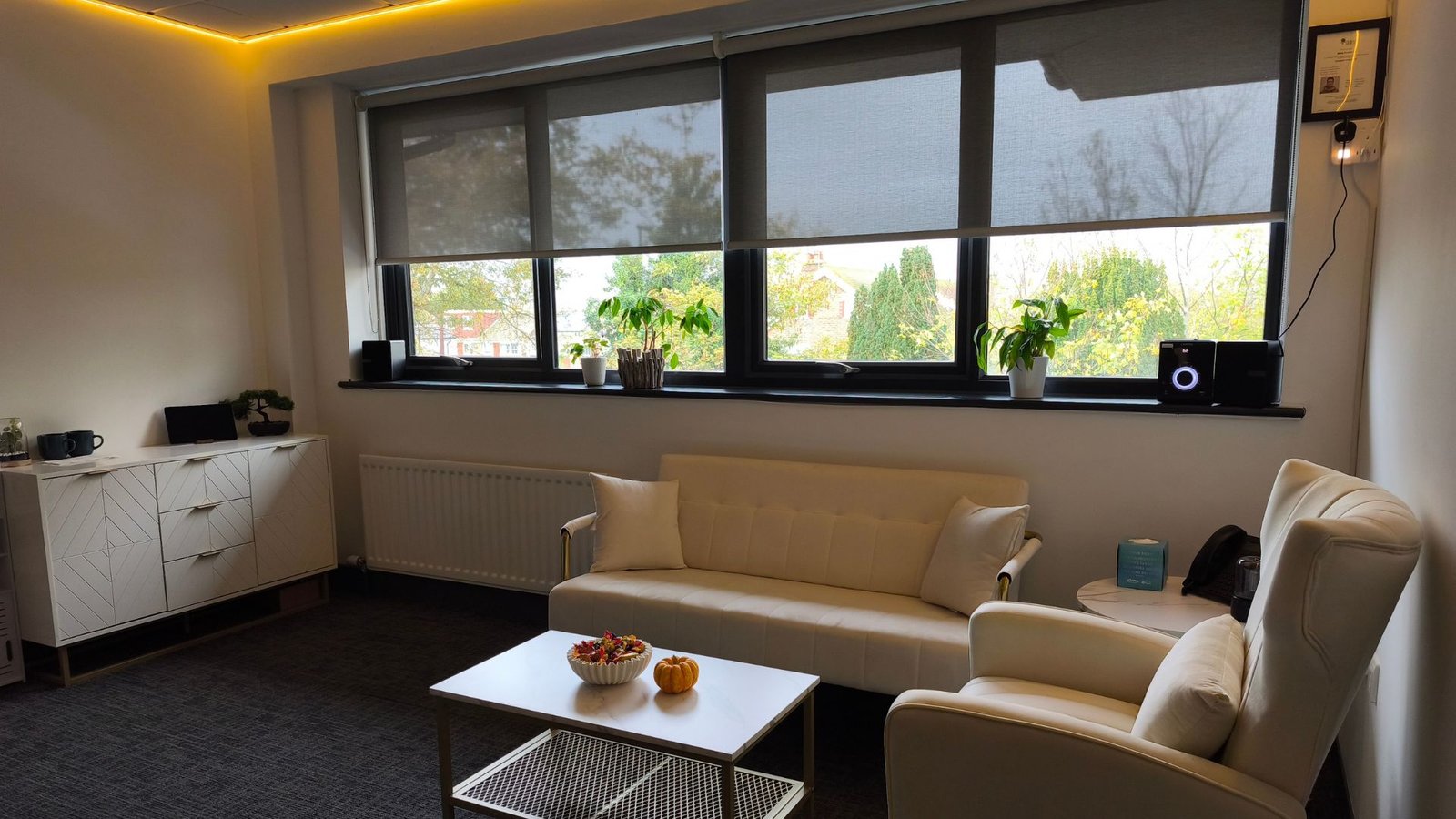
The ReviveO2 waiting area, Littlehampton - calm and welcoming before your session
Why people use HBOT for wellness
People try HBOT for everyday reasons like wanting a calm hour to switch off, adding a recovery habit after busy weeks or training, or building a simple wellness routine.
In a wellness setting, the aim is comfort and relaxation. Everyone responds differently, and any changes you notice can be subtle.
Many people come back because they like the calm, supervised setup and the feeling of having a regular routine they can stick to.
If you want the practical details of what's included, see our HBOT session page.
Safety: who should not use HBOT
While HBOT is generally safe for wellness use at lower pressures, certain conditions require medical clearance or make HBOT unsuitable. The contraindication categories below follow clinical hyperbaric safety guidance from the Undersea and Hyperbaric Medical Society (UHMS). This is why every client completes a thorough safety screening before their first session.
Do not use HBOT
- Untreated pneumothorax (collapsed lung)
- Certain chemotherapy drugs (doxorubicin, bleomycin, cisplatin)
- Recent ear surgery or severe ear blockage
- Certain lung disease with air-trapping (large bullae or blebs)
Needs medical clearance first
- Pregnancy or actively trying to conceive
- Recent heart surgery or unstable cardiac conditions
- Chronic lung diseases (COPD, emphysema, asthma)
- Seizure disorders
- Pacemaker or implanted cardiac devices
Common mild discomforts
- Ear pressure or fullness - similar to flying; usually resolves with equalising techniques
- Sinus pressure or mild congestion - avoid sessions if you have a cold
- Feeling warm - increased metabolism and the enclosed space can create warmth
- Dry mouth or thirst - breathing concentrated oxygen can have a drying effect
- Temporary tiredness after first few sessions, as body adapts
- Mild anxiety in rare cases, related to the enclosed space; usually eases quickly
Serious but rare risks
- Barotrauma (pressure injury to the middle ear) - prevented by proper equalising technique and avoiding sessions when congested
- Oxygen toxicity is mainly linked to prolonged exposure at higher pressures. At typical wellness pressures and session lengths, it is generally considered very unlikely, and sessions are still supervised with safety checks.
- Temporary vision changes - short-term nearsightedness has been reported after repeated sessions; usually resolves within weeks of stopping
If you experience severe ear pain, vision changes, chest discomfort, or unusual symptoms during or after a session, inform staff immediately and seek medical advice.
See full guide: Who should not do HBOT - link comingHow to prepare
What to wear
- Comfortable, loose cotton clothing - avoid polyester, nylon, spandex
- No metal jewellery, watches, or accessories
- Remove shoes
What to avoid
- No perfume or scented products
- No petroleum-based products (Vaseline, petroleum jelly)
- Avoid heavy meals 2 hours before
- Skip the session if you have a blocked nose or cold
What to bring
- Book or magazine if you like to read (we provide these too)
- Water bottle (we provide water)
- Comfortable mindset - arrive calm, not rushing
Timing
- Arrive 10-15 minutes early for your first session
- Allow extra time for safety screening, questions, and settling in
How often people do HBOT
How often you book HBOT is a personal choice. Some people try one session first, then decide if they want it as part of a routine. Others prefer a simple plan, like weekly sessions, because it is easy to stick to.
If you want structure, memberships or multi-session options can make it simpler to stay consistent. The best approach is the one you can realistically keep up with, and that feels comfortable for you.
If you are unsure what to pick, start with one session and decide from there. Like the gym, the value builds with consistency - not with one visit.
HBOT vs other wellness therapies
People sometimes compare HBOT with other wellness options like breathwork, cold exposure, float tanks, or IV services. These are different experiences with different goals. HBOT at ReviveO2 is a calm, supervised session in a soft-shell chamber at 1.5 ATA, designed to help you rest and reset. If you are choosing between options, the best choice is the one you can do consistently and comfortably.
ReviveO2 also offers Nervous System Regulation (NSR), Cellular Recovery (combining Red Light Therapy and PEMF), and Pelvic Floor Chair sessions. Many clients combine HBOT with one or more of these - Matej can talk you through what makes sense for your goals.
Pricing at ReviveO2
HBOT is a paid wellness service. We keep pricing simple with single sessions and membership options. Check the website for the latest prices and any limited-time offers.
What's included in a session
- Safety screening form sent to you by email before your visit - so everything is checked before you arrive, not when you get there
- Guided chamber orientation
- Sanitised equipment and a clean setup
- Ambient music, ambient light, or silence (your choice)
- Reading materials if desired
- Post-session water and recovery area access
- Staff supervision throughout
Time commitment
- 65 minutes total per session (60 minutes in chamber, 5 minutes pressurisation and decompression). Slower if needed for ear equalising.
- ReviveO2 is at Bizspace on Courtwick Lane in Littlehampton, with on-site parking plus on-street parking nearby.
- For your first visit, allow extra time for the safety screening and questions.
- Consistency matters more than doing a lot in one week. Choose a frequency you can realistically stick to.
How you feel after HBOT
People describe different experiences after a session. Some say they feel calmer or more refreshed, but everyone responds differently.
- Feeling a bit clearer-headed or more settled
- Feeling lighter or more refreshed
- A calm, steady kind of energy
- Sleeping really well that night (for some people)
Over the following days, some people say they notice small changes in sleep pattern, feeling better placed to stick to a recovery routine, or more consistent day-to-day energy. With regular sessions, many say the value comes from the routine itself - a set hour to switch off each week.
If you do not notice anything, that can be normal. Some people feel a difference straight away, some notice subtle changes over time, and some do not notice much at all.
HBOT as a wellness practice
Hyperbaric Oxygen Therapy can be a simple wellness session that fits into many lifestyles, including parents, desk workers, athletes, and anyone who wants a calm, guided hour away from screens.
One thing people often like is the enforced simplicity: you are lying down, breathing normally, and taking time out. For many, that calm environment is a big part of the experience.
Reminder: HBOT at ReviveO2 is offered as a supervised wellness service and is not a medical treatment. If you have a health condition or you are unsure, check with your clinician before booking.
Common feedback themes from ReviveO2 clients
Some people tell us they enjoy the session because it forces them to slow down and rest for a set period of time.
Some people like coming in as part of a simple weekly routine, especially when life feels busy and they want a calm reset.
Some active clients book sessions around training because they enjoy the recovery-focused downtime.
The experience is personal and can vary. A simple approach is to start with one session, then decide if a short series fits your routine.
Want to see what locals say? Read our Google reviews
Ready to try a session? Intro session at ReviveO2, Littlehampton. Book online, no referral needed.
Book your first HBOT sessionFrequently asked questions
Related guides
Intro session at ReviveO2, Littlehampton. Book online, no referral needed.
Book your first HBOT sessionReferences and further reading
- Henry, W. (1803). Experiments on the quantity of gases absorbed by water. Philosophical Transactions of the Royal Society, 93, 29-274.
- Mayo Clinic. (2024). Hyperbaric oxygen therapy overview.
- Cleveland Clinic. (2023). HBOT: what it is and how it works.
- Johns Hopkins Medicine. Hyperbaric oxygen therapy.
- National Library of Medicine. (2023). Hyperbaric oxygen therapy research.
- NHS. Hyperbaric oxygen treatment information.

Where to book HBOT in Littlehampton
ReviveO2 is based in Littlehampton, West Sussex, at Bizspace on Courtwick Lane. We have on-site parking, and there is also on-street parking nearby.
We welcome clients from across West Sussex, including: