

Is HBOT claustrophobic? Inside the chamber at ReviveO2
Most people do not find HBOT claustrophobic at ReviveO2. According to a study published in StatPearls (NIH Bookshelf), fewer than 1 in 1,000 first-time users report claustrophobic distress during a Hyperbaric Oxygen Therapy (HBOT) session.
This guide shows you exactly what the chamber feels like at our Littlehampton centre, the specific moments people worry about, and the simple steps that keep your first session calm.
At a glance
- Will it feel claustrophobic: for fewer than 1 in 1,000 first-time users, yes - for most, no
- The nervy bit: the first 5 minutes of pressurisation, when ears equalise
- The calm bit: the next 55 minutes, steady at 1.5 ATA
- Can you stop: yes, at any moment - you tell us and we slow or stop
- Chamber type: soft-shell with two viewing windows
- Practitioner: Matt, DDRC Healthcare certified, in the room throughout
- Where: Bizspace, Courtwick Lane, Office 46, Littlehampton BN17 7TL
What people actually mean by claustrophobic with HBOT
The word "claustrophobic" covers four different experiences with HBOT. Most of them are not true claustrophobia.
- Fear of the unknown: you have not been in a pressurised chamber before, so you cannot picture what it will feel like
- Loss-of-control worry: the question "what if I want out and cannot leave?" sits in your head before you arrive
- Ear pressure sensation: pressurisation pushes on your eardrums, which feels unfamiliar at first
- Mental quietness: when external distractions stop, your thoughts get louder, which can feel uncomfortable for the first few minutes
The fix for all four is the same: clear explanation, slow pace, and knowing you can communicate at any moment. Matt walks every first-time client through the process before pressurisation starts.
How often does claustrophobia actually happen?
According to a study of monoplace chamber patients published in StatPearls (NIH Bookshelf), the overall rate of adverse effects during HBOT is approximately 0.4%, of which around 25% relates to confinement anxiety. That works out at fewer than 1 in 1,000 first-time users reporting claustrophobic distress severe enough to be recorded.
The four first-time visitors at ReviveO2 Littlehampton who completed sessions in 2025 all completed pressurisation without pause.
For the full medical screening list, see Who Should Not Do HBOT in Littlehampton.
What does the chamber feel like at ReviveO2?
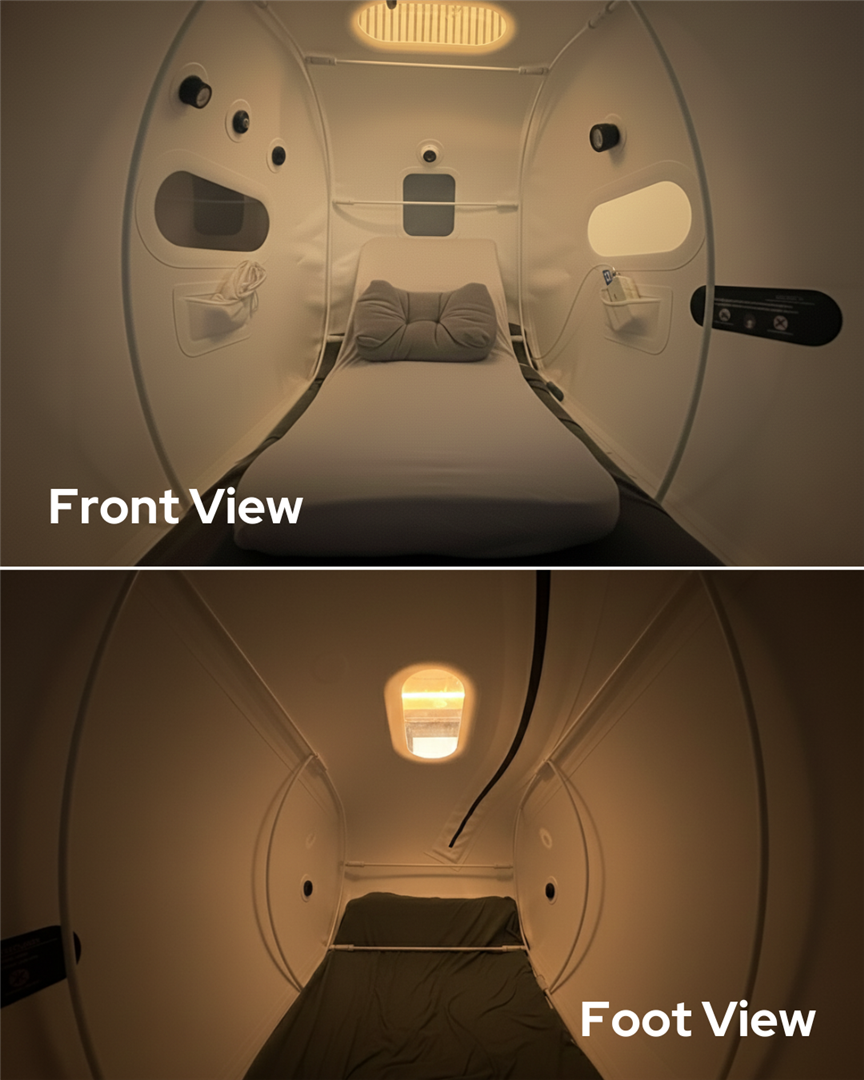
The ReviveO2 chamber is a soft-shell hyperbaric chamber operating at 1.5 ATA (1.5 times normal atmospheric pressure). You lie down on a made-up bed inside, with two viewing windows visible and a top vent that brings in steady airflow.
Space and position
You lie down comfortably on a single-bed-sized mattress with a cushion. You can move your hands, bend your knees, and turn your head. Most clients say it feels more open than they expected once the pressurisation completes.
Light and visibility
Two viewing windows let you see out throughout the session. The chamber interior is white fabric, which reflects the room light, so it stays bright rather than dim.
Sound and sensation
Pressurisation lasts five minutes. The main sensation is mild ear pressure, equalised by swallowing or yawning. After pressurisation completes, the chamber becomes steady and quiet, similar to a quiet bedroom.
For ear equalising techniques in detail, see HBOT Ear Equalising Tips for Littlehampton Clients.
Time
Total appointment is 65 minutes: 5 minutes pressurising, 55 minutes at steady 1.5 ATA, 5 minutes depressurising. If you need a slower pressurisation, the practitioner can extend the first phase to 7 or 10 minutes.
Where the chamber is set up
The ReviveO2 chamber sits in a private wood-panelled room with soft warm lighting at our Littlehampton centre. The room holds two soft-shell chambers and a freshly serviced oxygen concentrator. There is a step-up bench beside each chamber for easy entry.
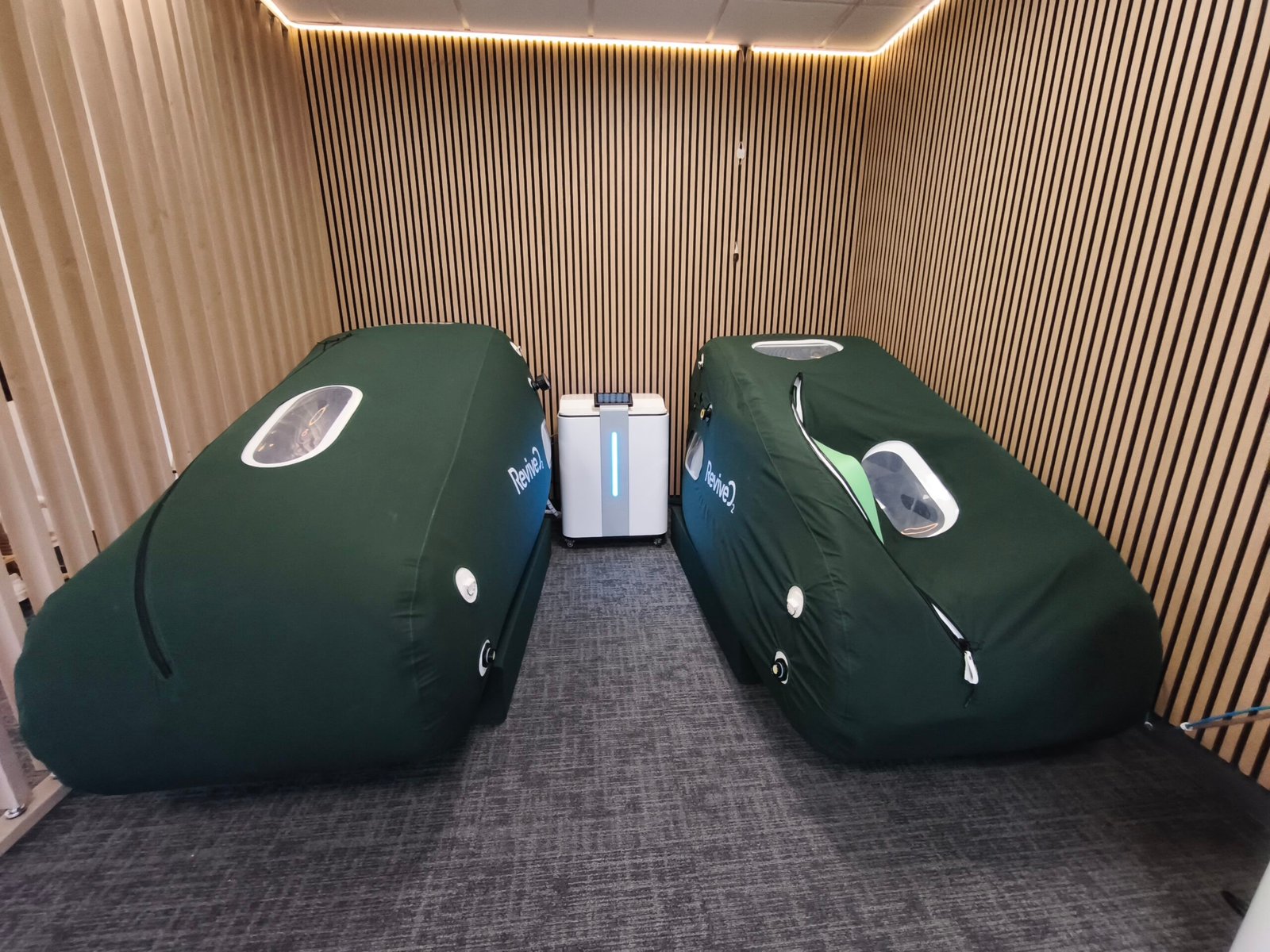
The wood panelling absorbs sound, so the room stays quiet during sessions. Matt remains in or beside the room throughout, never out of speaking distance.
What can you do inside the chamber?
Inside the chamber for 55 minutes of steady pressure, you can:
- Read a paperback book or magazine
- Rest with your eyes closed and breathe normally
- Nap: many clients fall asleep once pressurisation completes
- Listen to calm music or stay in silence
You cannot bring electronic devices into the chamber for safety reasons (no phones, no tablets, no e-readers with batteries). The practitioner provides reading material if you forget yours.
Why do most people feel calmer after the first 10 minutes?
Pressurisation is the only sensation phase of the session. Once the chamber reaches 1.5 ATA, the pressure stays steady, the ear equalising stops, and the chamber becomes quiet. Most clients report that the worry stops at minute 7 or 8, then the rest of the hour passes the way a long bath does.
For what to expect minute-by-minute on your first visit, see Your First HBOT Session in Littlehampton.
How can you feel calm on your first HBOT session?
Five things help most:
- Tell us during screening if you think you might feel nervous
- Choose a slower pressurisation for your first visit (7 or 10 minutes instead of 5)
- Breathe slowly through your nose for the first 60 to 90 seconds inside
- Treat the first session as a "try and see" visit, not a long-term decision
- Book a time slot you will not feel rushed arriving for
The biggest single factor is pace. Rushing the first pressurisation is what creates panic. A slower pace gives your ears and your brain time to settle.
Can you stop the session if you feel uncomfortable?
Yes. You can pause, slow, or end the session at any moment.
According to DDRC Healthcare, the Diving Diseases Research Centre in Plymouth and the UK certification authority for hyperbaric chamber operators, every HBOT session must be supervised by a certified operator who can adjust pressurisation at the client's request. Matt holds DDRC Healthcare certification and operates every session at ReviveO2 under this protocol.
You speak through the chamber wall and the practitioner hears you immediately. There is no intercom delay because the chamber is in the same room.
When is HBOT not right for you today?
According to Cleveland Clinic, HBOT is not suitable on a particular day if you have:
- An active cold or sinus congestion
- An unmanaged ear infection
- Inability to equalise ear pressure
- Severe, unmanaged claustrophobia that has not responded to coaching
For the full safety screening list, see Who Should Not Do HBOT in Littlehampton.
Local context for Littlehampton first-time visitors
If you are travelling from Worthing, Rustington, East Preston, Arundel, Bognor Regis, or Chichester, the journey is 10 to 35 minutes by car. Bizspace has on-site parking. Most first-time clients arrive 10 minutes early to settle, fill in any final paperwork, and ask questions before the session.
For what to bring and how the first appointment works, see Your First HBOT Session in Littlehampton.
FAQs
In plain English
If you are worried that HBOT might feel like being shut in a small box, most people who try it say the opposite. You lie down on a bed inside a soft fabric chamber with two windows. There are five minutes at the start when your ears feel a bit funny, like landing in a plane. After those five minutes, you have an hour where you can read, nap, or just rest. Matt stays in the room. If you want to stop, you say so and we stop.
That is the whole session.
The fear is almost always worse before than during. If you have been putting it off because you were not sure how it would feel, the simplest thing is to come in, try one session, and decide afterwards.
Want to see the chamber before the bed is made up?
Two photos showing the chamber interior in transit state, before the freshly-laundered bedding is set. Some first-time visitors prefer to see this view, others do not.


Related guides
Try one HBOT session at ReviveO2 Littlehampton, £35. A taster session is the calmest way to find out if HBOT works for you. Includes personal reservoir mask and bag. No contract.
Book your first session- StatPearls, NIH Bookshelf. Hyperbaric Complications. ncbi.nlm.nih.gov/books/NBK459191/
- Cleveland Clinic. Hyperbaric Oxygen Therapy: What It Is, Benefits, Side Effects. my.clevelandclinic.org/health/treatments/17811-hyperbaric-oxygen-therapy
- DDRC Healthcare. Hyperbaric chamber operator training. ddrc.org